Healing after Narcissistic Abuse.
Find out in this blog on how to deal Emotional Healing after Narcissistic Abuse.
Have you been in a Narcissistic or in some form of an abusive relationship?
How long does the healing process take to achieve emotional healing after narcissistic abuse?
Perhaps you’ve been sitting around, asking yourself the following questions…
“Why does it take so long to heal from this kind of narcissistic heartache?”, “Why can’t I stop thinking about the person who treated me so badly?”, “Why do I still love them after all the pain they put me through?”, “Will this pain ever go away?”
To be obsessing over an emotionally abusive relationship is extremely exhausting and draining, and often so detrimental that many go into a deep state of depression and even lose their jobs, homes, and even custody of their children. In severe cases, suicide is attempted and sometimes successfully carried out.
There are many elements involved in healing from narcissistic abuse. Just as with any loss, there will be periods of grieving, denial, anger, and depression. However, unlike a typical break-up where you would eventually get to a point of acceptance, many victims of narcissistic abuse stay fixated and obsess about their abuser, often suffering long term pain for ten years or more post-breakup.
Why does this happen and what can you do in your journey of emotional healing after narcissistic abuse?
Guidelines to follow for emotional healing after narcissistic abuse…
Firstly, the most important guideline and technique is to ground yourself through soothing methods.
Remember grounding is a coping strategy that is designed to “ground” you in, or immediately connect you with, the present moment. Grounding techniques are often used as a way of coping with flashbacks or dissociation when you have post-traumatic stress disorder.
They can also be helpful in other types of anxiety.
Because of its focus on being present in the moment, grounding can be considered a variant of mindfulness.
Grounding techniques can also be a distraction, to get you out of your head and away from upsetting thoughts, memories, or feelings.
How you ground yourself is highly personal. What may work for you may not trigger anxiety or flashbacks in another. It will probably take some trial and error to figure out what grounding techniques work best for you. Perhaps look at what coping mechanisms you’ve already developed to help you get through flashbacks and anxiety and see if you can build on them and or use them as grounding techniques.

Most important find your breath, go through the following steps to help you ground yourself.
- Acknowledge 5 things you see around you.
- Acknowledge 4 things you can touch around you.
- Acknowledge 3 things you can hear.
- Acknowledge 2 things you can smell.
- Acknowledge 1 thing you can taste.
The secret sauce that you won’t find in many articles regarding healing is the importance of learning to ground yourself – a.k.a. self-soothing. Whether you do this is a good indicator of whether you will truly begin to heal.

Narcissistic abuse is an emotional trauma.
It targets your abandonment wound. When you feel betrayed, rejected, and abandoned by the narcissist, your brain hijacks your rational thinking and sends you into fight-or-flight mode. You have a thought (I’ve been rejected because I’m not good enough), you experience an emotion from that thought (panic, sadness, depression), and then you run back and forth on your anti-depressants or reach out to other substances.
There’s not a lot you can do to prevent this from happening other than practicing self-soothing methods and grounding techniques will help damper this emotional hijack if repeated consistently. The best techniques are the same ones used to help with Post Traumatic Stress Disorder (PTSD) triggers and emotional trauma.
Learning to self-soothe is the critical first step because otherwise, any activities you engage in to heal and move forward will be drained away by the emotional hijacking caused by your brain.
It is a good thing to grieve and be angry as many victims of narcissistic abuse have a false perception that since the narcissist was a fraud and the relationship was one-sided, that they shouldn’t allow themselves to grieve or vent their anger. This couldn’t be further from the truth. Not allowing yourself to process these feelings often leads to detrimental outcomes at a later point in time, such as getting stuck in emotional, or spiritual levels of bereavement.

This typically manifests in symptoms such as:
- Staying stuck in a sad, angry, or depressive state, or often feeling emotionless
- Signs of suppressed anger
- Prolonged exhaustion, depression, or indifference
- One or more addictions
- Repeated avoidances
- Some type of chronic pain or illness

You need to seek professional help if you believe you may suffer from any form of psychological neuroses, such as complicated grief, which is
a severe and long-lasting form of grief that takes over one’s life. This is very common in the aftermath of abusive relationships because victims never get the validation they wished for, nor do they get a sense of closure.
Following the end of an abusive relationship, a lot of business is left unfinished, including unsettled disputes, the discrediting of your character, questions unanswered, and unrequited love. You’re left hanging, unable to complete your relationship with your abuser and feeling stuck in the pain of your grief for many years after the abuse.
What makes this type of grief so excruciating is that you must grieve twice – once for the person who love-bombed you and for whom you fought to bring back amidst soul-shattering abuse, and you also grieve the end of the relationship.
If you believe you might be suffering from complicated grief, please seek the services of a licensed therapist who specializes in emotional abuse/trauma. It may be necessary to go on medication but inquire about non-addictive medication that you can use on your most difficult days.
(Please note – complicated grief used to be attributed strictly to bereavement, but medical professionals now agree that it can apply to any type of traumatic loss).

Make sure you’ve implemented No Contact in its true form
Many victims of narcissistic abuse prolong their suffering by leaving a window open in the event the narcissist decides to reach out. Across the forums and chat rooms, countless victims describe how they’ve been “No Contact” for such-and-such amount of time, but then receive a call or email from their ex. If the narcissist has a way in, then No Contact hasn’t been properly executed. This is the primary cause of not being able to heal because if your abuser has a way in, true healing cannot take place.
Once the narcissist successfully reaches out and provokes a response, you’re back in the thick of the abuse. (If children are involved, a very strict plan for modified contact should be legally documented, entered, and enforced).
Remember, narcissists are smug in their belief that you will surrender to their manipulations. Not going No Contact only strengthens their feelings of entitlement and perceived power and reduces your chances of emotional healing after narcissistic abuse.
Once you have discovered the phase of narcissism, educating yourself about narcissism is essential in understanding the traits of the disorder and helps you recognize the dynamics of abusive relationships. However, when it’s time to truly heal, your focus should then turn to healing methods, self-care, and narcissistic abuse recovery.
We need to be aware that constant research on the traits of narcissism keeps your focus on them, not on you or your recovery. Remember the old saying, “What fires together, wires together”? Each time you repeat a particular thought or action, you reinforce the connection between your neurons, turning those thoughts into a way of life, and thus influencing your day-to-day reality. Implementing self-care patterns that are positive and healthy may be difficult at first, but with practice, they too will become habitual and will help you recover faster.
The most important thing to remember is to work on your self-esteem because you need to realize that the perceived rejection from your abuser is an illusion, their primary goal is to make you feel worthless and invalidated and invisible. What that means is that even if they know within themselves that you are attractive, successful, and full of fun to be around, or the best partner they have ever had, they will NEVER admit to it, unless they are trying to keep you in the queue.
Narcissists strive to take away every morsel of your self-esteem because that is how they keep you hooked…to keep you guessing and thinking that you are second best, and not good enough. You start believing that it is better to be treated like garbage rather than one or nothing at all.
Remember, most of what comes out of their mouth is a lie, including the negative things they say about you.

Habits to Avoid During Emotional Healing from Narcissistic Abuse
While healing is different for everyone, there are things we do that hinder healing, and can even reverse any progress we may have made. Ironically, these are activities that every person coming out of a toxic relationship does, and further, ones which we are innately wired to do!
Having gone through some of these experiences myself, I do not want to be judgmental but, hope to save you time (and further heartache). Below, I share from a top therapist three behaviors that hinder emotional healing from narcissistic abuse and often keep survivors from ultimately making it over the threshold to the peace that awaits on the other side.

I QUOTE FROM TOP THERAPISTS
“1. Reading an inordinate amount of material relating to narcissism.
When you first began researching reasons why the narcissist behaves the way they do, the discovery that they may be narcissistic probably felt validating. It helped bring clarity to their behaviors, as well as your reactions to those behaviors.”
“However, there comes a point where further reading on the topic of narcissism becomes debatable and even destructive, because being well educated and clued up in narcissism won’t change the outcome of the relationship. It becomes destructive because it keeps your focus on the narcissist, the abuse, the trauma, and, more importantly, it keeps you from focusing on healing your own wounds.”
Once you have overcome the pain of narcissism you should not continue to read up or research as this will hinder you from moving on.
“A healing alternative begins by looking into your inner wounded core. Nothing outside of you will help you heal because your emotional injuries are within. Instead of researching how the narcissist became a narcissist, the type of narcissist they might be, and where they lie on the narcissistic continuum, turn your focus onto healing your damaged self-image and healing the toxic shame that the narcissist cultivated inside you to keep you dependent upon them.
What fires together, wires together. Meaning, whatever you feed your mind daily is what determines your baseline thought patterns. Limit your consumption of material on narcissism to about 90/10 (90% healing, 10% narcissism).”
“Believing that time heals all wounds is a myth, time doesn’t heal, it simply passes. Healing after narcissistic abuse has everything to do with what you do during that time. If time healed wounds, there wouldn’t be people who are still suffering five and ten years after their relationship ended (sometimes longer!)
Time doesn’t heal, it simply passes. Emotional healing after narcissistic abuse has everything to do with what you do with that time.”
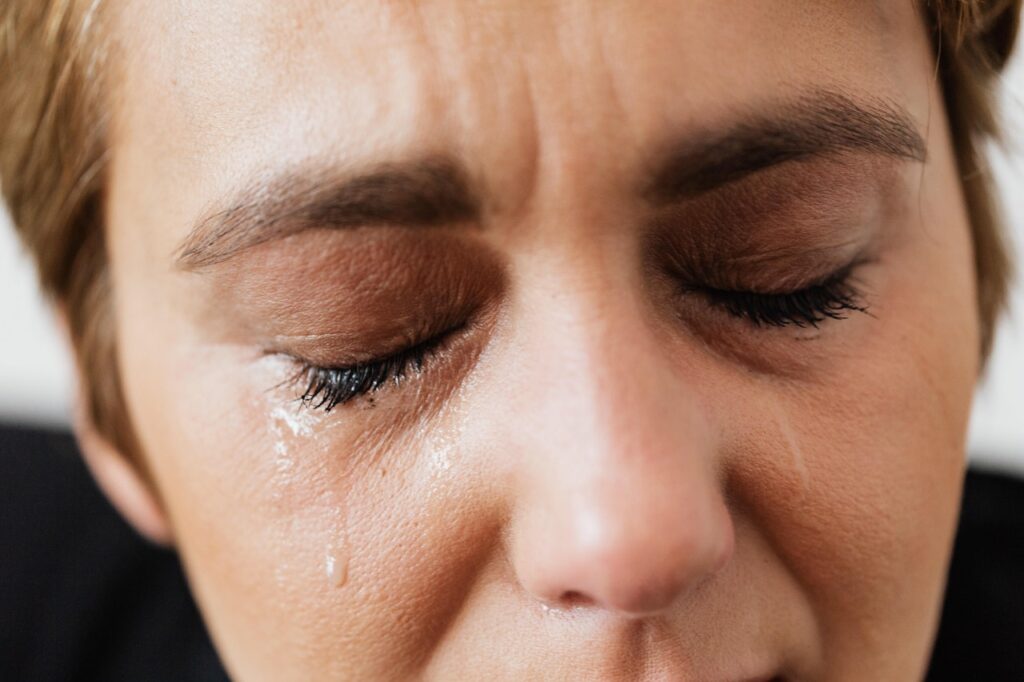
The key to recovery is action, not time.
“The subconscious mind is impersonal. It will work to achieve whatever goals you set before it, whether good or bad. Present it with goals of healing and recovery, and it will work to help you achieve those goals. The same goes for presenting it with goals for figuring out the narcissist. It may aid you in gaining knowledge about the narcissist’s condition, but that only leads you back to the inevitable outcome, which ultimately leaves you with nothing to show for all the hours invested in such an undertaking.”
“A healing alternative: If you’ve just discovered you are dealing with a narcissist, it’s only natural to want to analyze their motives, actions, and behaviors. That’s what our brains are designed to do. When you get to the point where you are consistently reading information that you already know, that’s a good point at which to end your research on narcissism and turn your focus onto your healing.
When you begin your healing work, keep in mind that for your subconscious mind to heal, it must experience healing events. Specifically, you may find some very good videos, books, or other written material about healing, but acquiring information through reading is passive. In other words, you must actively engage in the suggested healing activities for new neural patterns to form in your brain…a good rule of thumb is to choose a healing habit and practice it every day for at least 21 days.
It won’t do much good, for instance, if you only read books without putting into action what you have read. For example, studies have shown the powerful effect which writing has on the recovery process. It helps to form new neural pathways, whereas when you read or watch videos, your brain filters out most of what you consume! Therefore, there are various writing activities within a therapist-approved program for narcissistic abuse recovery.
“People are healed by different kinds of healers and systems because the real healer is within.”
~ George Goodheart
To overload your brain with information is not always the answer. There is an inherent risk involved in taking to heart everything one reads on the internet, especially when it involves healing from narcissistic abuse.
It’s tempting to get into the habit of collecting information from numerous sites, but then you run the risk of becoming so overwhelmed with data overload that you are unable to form an actionable plan.
Healing alternatives: Try to stick to a handful of authors whom you have grown to trust. Stop researching and collecting information and, instead, begin the programs that are suggested or created by the authors whom you admire the most.
Try and avoid sites that only emphasize the trauma, going on and on about narcissists and their dirty, evil deeds and post photos that traumatize the subconscious mind. Instead, follow ones that offer perspectives from the target’s point of view, as well as ones that suggest different healing methods.
Healing from narcissistic abuse…
It’s never too late to reclaim your life – to find yourself on the path towards your soul’s true healings and cravings.
You have it in your power to survive tough times – and come out stronger, better, wiser from this abusive relationship.

Signs that you can identify in a narcissist.
If you know you are in a narcistic relationship, and it is destroying you get help from a therapist and leave the relationship as soon as you can. It will destroy you eventually and you will have to go through a long healing process.